

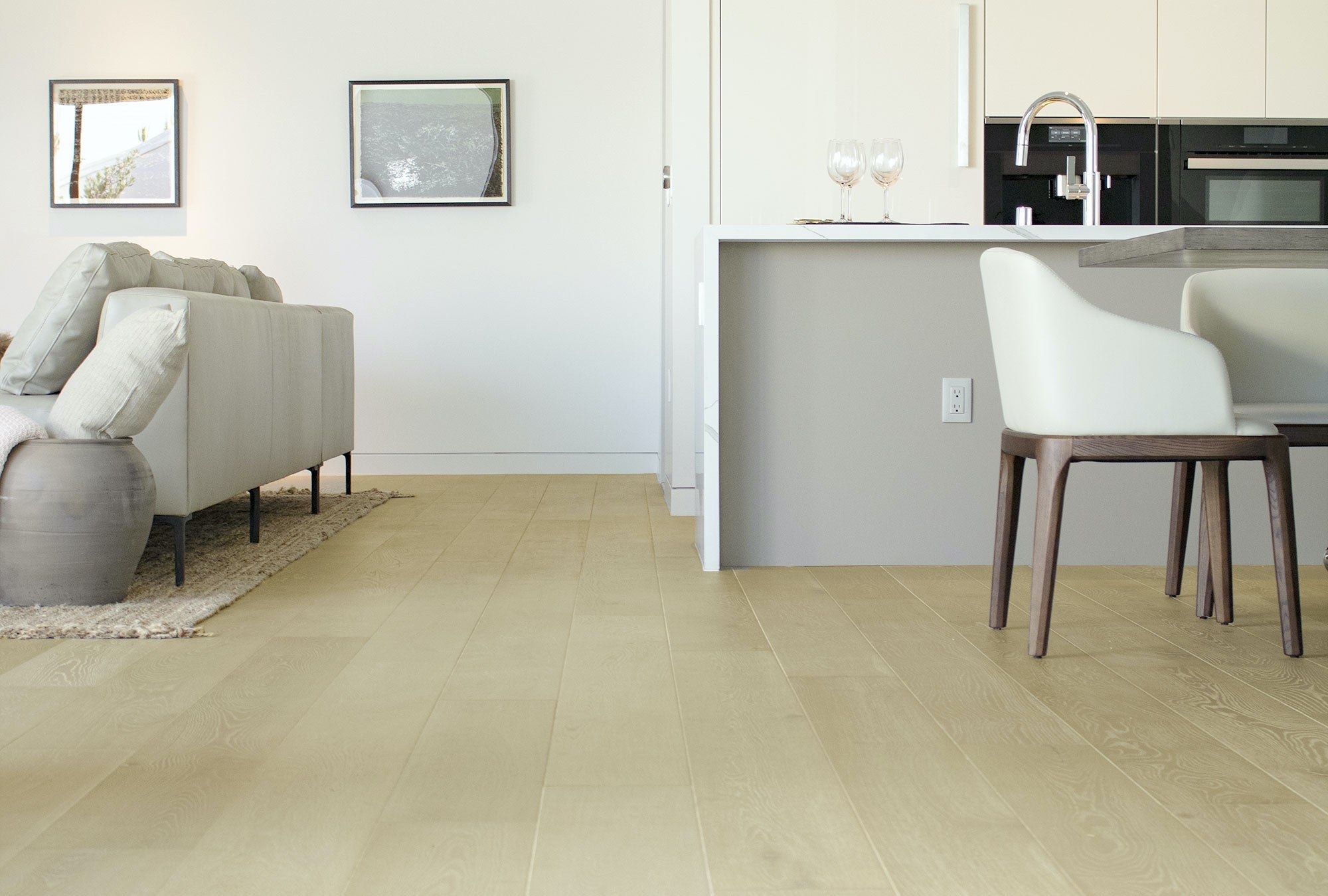
How Custom French White Oak Flooring Is Made
Custom hardwood flooring is often associated with luxury homes and high-end design, but many homeowners and designers don’t fully understand what goes into creating it.
Unlike mass-produced flooring, custom French white oak flooring involves a much more intentional process—from wood selection and milling to finishing and grading. Every detail is carefully considered to create flooring that feels tailored to the architecture and design of a space.
In this guide, we’ll walk through how custom French white oak flooring is made, and why the process plays such a major role in the final quality and appearance of the floor.
What Makes Flooring “Custom”?
Custom hardwood flooring goes beyond choosing a stain color. It involves tailoring multiple aspects of the flooring to fit a specific project.
Customization can include:
- Plank width
- Board length
- Color and finish
- Surface texture
- Wood grading
- Installation pattern
Rather than selecting from a limited set of pre-made options, custom flooring allows designers and homeowners to create a more refined and cohesive final result.
To explore available options, view:
👉 Custom Hardwood Flooring:
Why French White Oak Is Commonly Used for Custom Flooring
French white oak has become one of the most requested materials for custom hardwood flooring because of its balance of beauty, stability, and versatility.
It is especially valued for:
- Tight, refined grain patterns
- Subtle natural variation
- Excellent stain absorption
- Compatibility with wide plank formats
These characteristics make it ideal for custom finishes and designer-driven projects.
To see available styles, explore:
👉 French White Oak Flooring Collection
Step 1: Selecting the French White Oak
The process begins with sourcing the wood itself.
French white oak is typically chosen for:
- Grain consistency
- Structural stability
- Overall visual quality
The selection process also includes choosing the appropriate grade, which affects:
- Knot visibility
- Color variation
- Character markings
Some projects require a cleaner, more uniform appearance, while others embrace more natural variation and texture.

Step 2: Milling the Planks
Once the wood is selected, it is milled into planks according to the specifications of the project.
This includes determining:
- Plank width
- Board length
- Thickness
- Edge profile
Wide plank flooring is especially popular in custom French white oak projects because it creates a more open and seamless visual effect.
Longer board lengths are often used alongside wider planks to enhance continuity throughout the space.
Step 3: Engineered Construction
Most custom French white oak flooring today is engineered rather than solid.
Engineered construction consists of:
- A real French white oak wear layer
- Multiple layers of stable core material beneath
This construction provides:
- Greater dimensional stability
- Better performance in changing climates
- Compatibility with modern installation methods
It also allows for wider and longer planks with reduced movement over time.
Step 4: Surface Treatment and Texture
Before finishing, the flooring may receive additional surface treatments to achieve a particular look or feel.
Popular texture options include:
- Wire-brushed
- Smooth
- Sawn-face
- Lightly distressed
Texture affects:
- How light reflects across the floor
- How grain appears visually
- How wear develops over time
This step helps create a more customized and architectural final appearance.
Step 5: Developing the Finish and Color
One of the most important stages of custom flooring is finish development.
French white oak is highly valued because it absorbs stain evenly, allowing for greater precision and consistency in color creation.
Custom finishes may include:
- Light natural tones
- Warm neutrals
- Smoked finishes
- Matte finishes
- Reactive treatments
This stage often involves multiple rounds of sampling and refinement to achieve the desired result.

Step 6: Quality Control and Grading
Before installation, the flooring is reviewed for consistency and quality.
This includes evaluating:
- Color variation
- Grain consistency
- Board quality
- Finish uniformity
In custom projects, this level of quality control is especially important because flooring often becomes a defining visual feature of the home.
Step 7: Installation Planning
Custom flooring projects often require more intentional installation planning than standard flooring.
This may involve:
- Layout direction
- Transition details
- Stair integration
- Pattern layouts such as herringbone or chevron
Planning helps ensure the flooring works cohesively with the architecture of the space.
Why the Process Matters
The way flooring is made directly impacts:
- Appearance
- Performance
- Longevity
- Overall design quality
Custom French white oak flooring feels different because every stage of the process is more deliberate and design-focused.
Rather than producing a standardized product, the goal is to create flooring that supports the overall vision of the home.
Why Designers Prefer Custom French White Oak Flooring
Designers and architects often choose custom French white oak flooring because it offers:
- Greater creative flexibility
- More control over the final result
- Better material consistency
- A more elevated appearance
This level of customization allows the flooring to feel integrated into the architecture rather than simply added afterward.

Common Misconceptions About Custom Flooring Manufacturing
“Custom flooring is completely handmade.”
While there is craftsmanship involved, modern custom flooring also relies on advanced milling and finishing technology for consistency and precision.
“Custom flooring only means custom stain.”
Customization includes dimensions, texture, grading, finish, and layout—not just color.
“All French white oak flooring looks the same.”
Small differences in grain, finish, width, and texture can dramatically change the final appearance of the floor.
Final Thoughts
Custom French white oak flooring is the result of a carefully considered process that combines craftsmanship, material selection, and design intent.
From plank dimensions and texture to finish development and grading, every step influences how the floor ultimately looks, performs, and ages over time.
This attention to detail is one of the reasons custom French white oak flooring continues to be a defining feature in luxury homes and design-driven projects.
To better understand how customization fits into the overall flooring selection process, read the full guide:
👉 What Is Custom Hardwood Flooring? A Complete Guide
FAQ: How Custom French White Oak Flooring Is Made
What is custom French white oak flooring?
Custom French white oak flooring is flooring tailored to a project’s specific design goals, including custom widths, finishes, textures, and colors.
Is custom hardwood flooring engineered or solid?
Most modern custom French white oak flooring is engineered for greater stability and performance.
Why is French white oak used for custom flooring?
French white oak offers consistent grain, excellent stain absorption, and strong stability, making it ideal for customization.
Can custom hardwood flooring be made in wide planks?
Yes. French white oak is especially well-suited for wide plank flooring because of its dimensional stability.
Does custom flooring take longer to produce?
Yes. Because it involves specialized milling, finishing, and sampling, custom flooring typically requires longer lead times than standard pre-finished products.
