

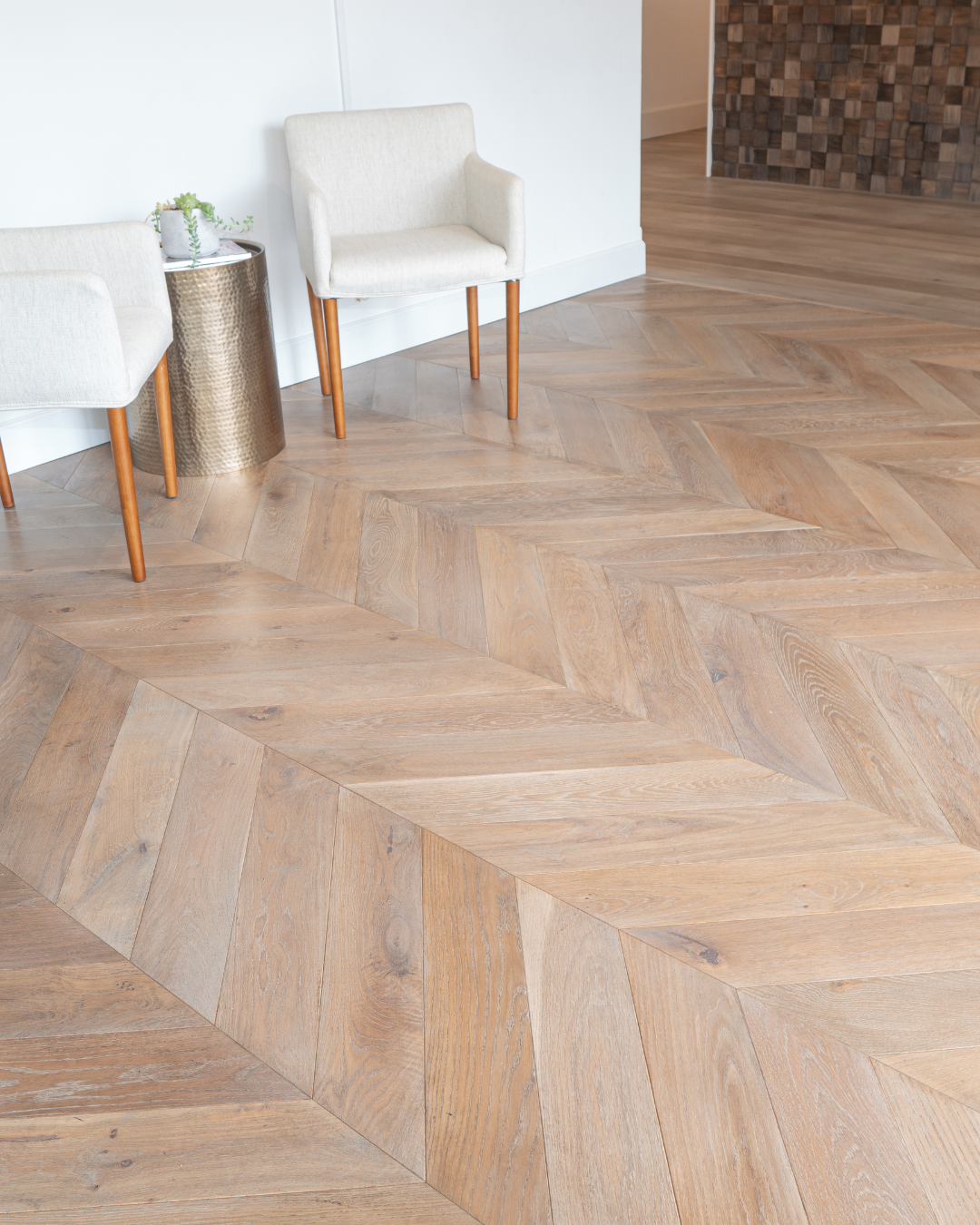
Herringbone vs. Chevron French White Oak Flooring: How to Choose
Herringbone and chevron flooring differ in how the boards meet. Herringbone uses rectangular pieces arranged at right angles to create a staggered zigzag. Chevron uses pieces with angled ends that meet in a continuous V. Both can bring pattern to French white oak flooring, but their layouts create different visual rhythms.
For a homeowner choosing an entryway floor or a designer specifying a larger interior, the decision involves more than personal preference. Room proportions, adjoining floors, installation details, and budget all deserve attention before the material is ordered.
How Herringbone and Chevron Flooring Compare
| Detail | Herringbone | Chevron |
|---|---|---|
| Board shape | Rectangular pieces with square ends | Pieces with angled ends |
| How the pieces meet | Ends meet the sides of adjoining pieces | Angled ends meet to form points |
| Overall pattern | Staggered zigzag | Continuous V-shaped lines |
| Design consideration | Repeated interlocking detail | Strong directional lines |
| Installation planning | Layout alignment and perimeter cuts | Layout alignment and precise meeting points |
Neither pattern belongs exclusively to a traditional or modern home. A pale, understated herringbone floor can suit a contemporary interior, while a darker chevron floor can work with classic architectural details. Color, board proportions, and surrounding materials influence the result as much as the pattern itself.
Choosing a Pattern for Your Room
Start by identifying the views that matter most. Look at the floor from the main entrance, from the adjacent room, and from the places where people will spend time. A pattern that looks balanced on a plan may read differently through a doorway.
Chevron creates a clear line through its meeting points. Consider how that direction relates to a fireplace, kitchen island, hallway, or central entrance. Herringbone creates a more interlocking arrangement, making the placement of the first rows and the treatment of room edges equally important.
Ask your installer to show the proposed layout before installation begins. In an irregular room, discuss where the pattern will start, which sightline will guide it, and where smaller perimeter pieces will fall. These decisions are easier to resolve before adhesive is spread or flooring is fastened.
Using Patterned Flooring Alongside Straight Planks
You can use a pattern in one area and straight planks elsewhere. An entryway, dining room, or study can become a defined part of the home while adjoining spaces retain a quieter floor layout.
To coordinate the two formats, compare the actual products. Confirm the color, grade, texture, finish, thickness, and transition details. A shared color name is a useful starting point, but the complete specification determines how the materials work together.
For example, if an entry opens into a wide plank living room, decide whether a border will frame the patterned area or whether the transition will occur directly at the doorway. Ask the installer to verify finished floor heights and explain the proposed connection.
Artistry offers herringbone and chevron options in its made-to-order collections, including relevant Hartford and Moniker selections. Confirm the available dimensions and configurations for the specific color before specifying your project.
Budgeting for Herringbone and Chevron Flooring
Request quotes for the complete installation. Material price alone does not show the cost of layout work, subfloor preparation, cuts, borders, or transitions.
Both patterns require careful alignment. The difference in installed cost depends on the product, room geometry, installer, and scope. Chevron should not automatically be assigned a fixed price premium over herringbone.
Ask each installer to identify the same items in the quote: floor preparation, pattern layout, labor, waste allowance, transitions, and any removal of existing flooring. Have the installer calculate the order quantity for the actual layout instead of applying a general straight-plank waste estimate.

Questions to Resolve Before Ordering
-
Which direction will the pattern run, and what feature will it align with?
-
Will the room include a border or other perimeter detail?
-
Which exact product will connect to the adjoining flooring?
-
Has the installer confirmed the substrate, installation method, and finished heights?
-
What quantity does the final layout require, including project-specific waste?
Record these decisions alongside the approved product selection. That gives the designer, supplier, and installer a common reference when the order is placed.
Frequently Asked Questions
Is herringbone or chevron better for a small room?
Either can work. Evaluate the size of the pattern pieces, the amount of exposed floor, and the layout seen through the doorway. A sample layout is more useful than a rule that one pattern always makes a room look larger.
Can I turn ordinary straight planks into either pattern?
Do not assume standard planks can be substituted. Pattern pieces may have specific dimensions, end cuts, and joint configurations. Confirm the approved material and installation requirements with the supplier and installer.
Is herringbone or chevron flooring easier to maintain?
Care requirements depend on the flooring and finish. Follow the maintenance instructions for the selected product rather than choosing a cleaning method based on its pattern.
Explore Your Pattern Options With Artistry
Bring your room plan and preferred floor colors to Artistry. We can help you review available French white oak options and identify the product details your installer needs. For more on selecting a customized floor, read our guide to custom hardwood flooring.
